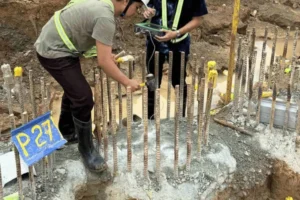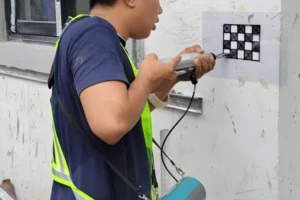
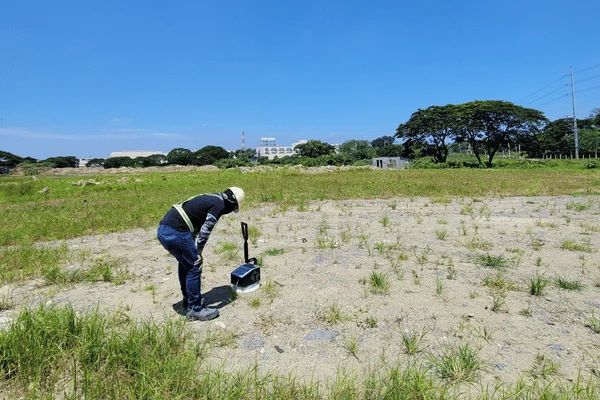
Soil quality and compaction are crucial factors that determine the safety and longevity of construction projects. A poorly compacted site can lead to structural settlement, foundation cracking, and costly repairs. The Field Density Test is a vital procedure for verifying the density and moisture content of soil before construction progresses. This test helps engineers, contractors, and developers confirm that the soil meets project specifications and industry standards, ensuring a solid foundation for buildings, roads, and other infrastructure. With professional testing services from accredited laboratories like Inch-On Materials Testing Laboratory, projects across the Philippines can achieve the reliability and stability required for long-term success.
The Field Density Test is widely used as part of construction quality control programs. It provides a clear assessment of soil compaction and moisture conditions, allowing engineers to take corrective measures if necessary. Using accurate testing methods, the Field Density Test helps prevent structural failures and reduces the risk of future settlement issues. Accurate field data ensures compliance with national and international standards, including ASTM and AASHTO, giving project owners confidence that their structures are supported by properly compacted soil.
What is a Field Density Test
A Field Density Test measures the in-place density and moisture content of compacted soil at a construction site. It determines whether the soil has been compacted to meet project specifications, which is critical for structural stability. This test is conducted after soil placement and compaction, serving as a quality control checkpoint before further construction, such as paving roads, installing foundations, or building structures.
The primary goal of the Field Density Test is to ensure that soil is strong enough to support the planned load without excessive settlement. The test provides reliable, data-driven results that engineers and contractors use to make decisions on whether additional compaction is required. By confirming soil density and moisture content, the Field Density Test prevents long-term structural problems that could compromise safety and increase maintenance costs.
Field Density Testing is a crucial step in the overall construction process. It complements other soil tests such as the Proctor Test, which determines the optimal moisture content and maximum dry density, and the California Bearing Ratio (CBR) test, which evaluates soil load-bearing capacity. Together, these tests form a comprehensive approach to assessing soil suitability for construction projects.
Why Field Density Testing is Critical
Construction projects rely on soil strength for structural stability. Uncompacted or poorly compacted soil can lead to foundation settlement, uneven pavement, and other costly issues. Conducting a Field Density Test ensures that soil meets engineering requirements and provides a solid foundation for roads, buildings, and foundation piles.
A properly executed Field Density Test prevents future problems such as cracking, subsidence, or shifting of structures. It also allows engineers to address potential issues early, reducing the need for expensive remediation. With soil conditions accurately assessed, contractors can confidently proceed with construction, knowing that the ground can safely support the intended load.
The Field Density Test is also essential for regulatory compliance. In the Philippines, DPWH-BRS accredited laboratories provide testing services that align with government standards. Using a certified laboratory ensures that construction projects meet local regulations and national engineering requirements. Compliance with ASTM and AASHTO standards guarantees that soil compaction is verified using recognized international methods, providing reliable results that withstand scrutiny from engineers, inspectors, and clients.
Field Density Testing is not only about safety. It contributes to cost efficiency by reducing the risk of rework and structural failures. Proper soil compaction verified through Field Density Test reduces long-term maintenance costs and ensures that infrastructure performs as intended for years to come.
How Field Density Test Works
The Field Density Test follows a systematic process to measure soil density and moisture content accurately. The test usually follows the Proctor Test and precedes the California Bearing Ratio (CBR) test as part of a standard soil quality control workflow.
The first step is the Proctor Test, which determines the optimum moisture content and maximum dry density of the soil. This laboratory test provides a reference point for field measurements, helping engineers understand the ideal compaction conditions. The Field Density Test then measures the actual soil density at the construction site, comparing it with the maximum density obtained from the Proctor Test. Any deviation indicates whether additional compaction is necessary to achieve the desired soil strength.
Several methods are commonly used to perform a Field Density Test, including the sand cone method and the nuclear density gauge method. The sand cone method involves excavating a small hole in the compacted soil and measuring the volume of sand required to fill the hole. This method is accurate and widely accepted for various soil types. The nuclear density gauge method uses a portable device that emits radiation to measure soil density and moisture content rapidly. Both methods provide reliable results, allowing engineers to verify compaction quality before proceeding with construction.
After measuring field density, engineers may perform the CBR test to evaluate the soil’s load-bearing capacity. Together, the Proctor Test, Field Density Test, and CBR test form a comprehensive assessment of soil suitability, ensuring that the construction site can support the intended structures safely.
Field Density Test Methods
The sand cone method is one of the most common ways to perform a Field Density Test. This method involves digging a small hole in the compacted soil and filling it with sand from a calibrated container. The weight and volume of sand required to fill the hole are measured to calculate the soil density. The sand cone method is accurate, cost-effective, and ideal for most construction projects, including roads, pavements, and building foundations.
The nuclear density gauge method provides a faster alternative for conducting a Field Density Test. This method uses a portable nuclear device to emit radiation into the soil, measuring density and moisture content within seconds. The nuclear method is particularly useful for large construction sites where multiple measurements are required quickly. Both methods provide reliable and repeatable results, ensuring that soil compaction meets project specifications and engineering standards.
Comparison of methods can help engineers choose the most suitable approach for their projects. The sand cone method is simple and low-cost, while the nuclear density gauge method offers speed and efficiency for larger-scale testing. Selecting the right method ensures accurate Field Density Test results and supports informed decision-making during construction.
Benefits of Professional Field Density Testing
Professional Field Density Test services provide numerous advantages for construction projects. First, they ensure compliance with ASTM and AASHTO standards, which are recognized internationally for soil and construction material testing. Accurate testing protects projects from future structural failures and reduces long-term maintenance costs.
Field Density Testing also provides reliable documentation for engineers, contractors, and project owners. Detailed reports outline soil density, moisture content, and compaction quality, allowing stakeholders to make informed decisions. These reports are essential for regulatory compliance and can be used for project verification and quality assurance.
Using a professional laboratory, such as Inch-On Materials Testing Laboratory, guarantees that the Field Density Test is conducted accurately and according to recognized standards. Accredited laboratories provide expertise, certified equipment, and proper procedures that ensure reliable results, contributing to project success and safety.
Proper Field Density Testing improves project efficiency. By confirming that soil compaction meets specifications before construction proceeds, engineers and contractors can avoid delays, rework, and unexpected issues. Projects completed on well-compacted soil experience fewer structural problems, reducing costs and enhancing long-term durability.
Why Choose Inch-On Materials Testing Laboratory
Inch-On Materials Testing Laboratory has served construction projects across the Philippines since 2018. As a DPWH-BRS accredited laboratory, Inch-On specializes in soil and construction material testing, offering both field and laboratory services. The laboratory conducts Field Density Test, Proctor Tests, CBR Tests, and in-situ evaluations of soil, concrete, and foundation piles.
The laboratory uses ASTM and AASHTO-approved testing procedures, ensuring accurate and reliable results. Engineers, developers, and contractors rely on Inch-On for verified testing that supports project safety, compliance, and structural integrity. The laboratory’s commitment to precise testing and thorough reporting ensures that every construction project begins on a solid foundation.
Choosing Inch-On Materials Testing Laboratory for Field Density Testing guarantees professional, reliable, and accredited testing services. Project owners benefit from detailed reports, fast turnaround, and expert recommendations for soil compaction and site preparation.
Takeaway
The Field Density Test is a critical procedure for ensuring that soil compaction meets project specifications and engineering standards. Conducting this test prevents structural settlement, foundation problems, and costly repairs, providing peace of mind for engineers, contractors, and developers. Using accredited laboratories like Inch-On Materials Testing Laboratory ensures accurate, reliable, and compliant testing. Properly tested soil forms a solid foundation for roads, buildings, and infrastructure, supporting safe and durable construction for years to come.
Frequently Asked Questions (FAQs)
What is the purpose of a Field Density Test?
The Field Density Test determines the density and moisture content of compacted soil at a construction site. It ensures that soil meets project specifications and provides a stable foundation for structures.
What is the difference between a Proctor Test and a Field Density Test?
The Proctor Test is a laboratory procedure that identifies the maximum dry density and optimum moisture content of soil. The Field Density Test measures actual soil density and moisture at the construction site to confirm proper compaction.
How long does a Field Density Test take?
Testing time depends on the method used. The sand cone method typically takes 30–60 minutes per test, while the nuclear density gauge method provides results in a few minutes per location.
Can Field Density Testing prevent future foundation problems?
Yes. Accurate Field Density Test results allow engineers to identify under-compacted soil and take corrective action, reducing the risk of settlement, cracks, and structural failures.
Why choose Inch-On Materials Testing Laboratory for Field Density Test services?
Inch-On is a DPWH-BRS accredited laboratory with certified testing procedures, experienced personnel, and reliable reporting. Choosing Inch-On ensures accurate, regulatory-compliant results that support safe and durable construction.
Which Field Density Test method is best?
The choice depends on the project size and requirements. The sand cone method is accurate and cost-effective for most projects, while the nuclear density gauge method is faster and ideal for large sites requiring multiple measurements.