Ensuring the strength and durability of concrete structures is a critical step for every construction project. Testing concrete without damaging it is essential for maintaining structural integrity while keeping projects on schedule. The Rebound Hammer Test provides a reliable solution, allowing engineers and contractors to assess concrete surface hardness and estimate compressive strength without removing or coring sections of the structure. This method has become a standard practice across the Philippines, and Inch-On Materials Testing Laboratory offers professional services backed by DPWH-BRS accreditation, ensuring accurate and dependable results for both new and existing structures.
The Rebound Hammer Test is ideal for evaluating a wide range of concrete elements, including slabs, beams, columns, and walls. By measuring the rebound of a spring-loaded steel hammer striking the concrete surface, engineers can estimate compressive strength and detect potential weak zones. This technique complements other non-destructive evaluation (NDE) methods, such as rebar scanning, offering a comprehensive understanding of structural conditions without causing damage.
What is the Rebound Hammer Test?
The Rebound Hammer Test is a non-destructive method used to assess the surface hardness of hardened concrete, which correlates with compressive strength. Sometimes referred to as the Schmidt Hammer Test, this procedure has been widely adopted in civil engineering for decades due to its efficiency, ease of use, and reliable results. Unlike core sampling or other destructive methods, the Rebound Hammer Test provides quick feedback while preserving the concrete structure.
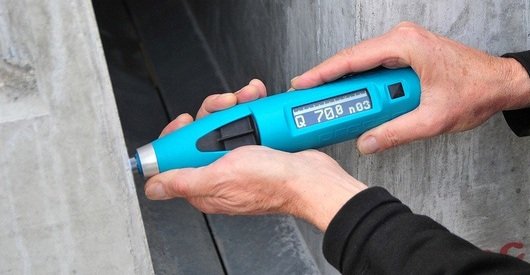
This testing method involves a spring-loaded hammer that impacts the concrete surface and measures the rebound of the hammer’s plunger. The rebound value, or “rebound number,” provides an indication of concrete hardness. Higher rebound numbers typically signify stronger concrete, while lower values may indicate weaker zones or surface deterioration. The Rebound Hammer Test is commonly used for quality control, uniformity checks, and evaluating the condition of existing infrastructure.
How the Rebound Hammer Test Works
The principle of the Rebound Hammer Test is straightforward yet highly effective. A spring-driven steel hammer is released onto the concrete surface, and the rebound of the plunger is measured. The rebound value reflects the hardness of the surface, which engineers can correlate to compressive strength. While surface hardness does not capture the full structural capacity of concrete, it provides a reliable estimate that informs further testing or evaluation.
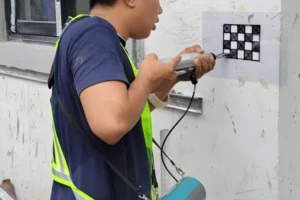
The testing procedure typically starts with surface preparation. Any loose particles, dirt, or coatings are removed to ensure an accurate reading. The hammer is then pressed against the surface, and the impact is released. The rebound number is recorded, and multiple measurements are taken across the area to account for variability. These readings are analyzed using standardized charts and reference tables to estimate the compressive strength of the concrete.
Technicians performing the Rebound Hammer Test follow recognized standards, such as ASTM C805, to ensure consistency and accuracy. Conducting multiple readings across a structure allows for mapping of weaker zones, checking uniformity, and identifying areas that may require repair or further investigation.
Applications of the Rebound Hammer Test
The Rebound Hammer Test serves several critical applications in construction and maintenance. For newly poured concrete, this test provides a quick assessment of quality and uniformity. Contractors can identify areas with lower surface hardness and take corrective measures before further construction continues.
For existing structures, the Rebound Hammer Test is an effective tool for monitoring deterioration. Aging infrastructure, exposed to weather and heavy use, may develop surface wear or cracking. This test helps engineers detect potential weak zones early, enabling proactive maintenance or rehabilitation without unnecessary demolition.
The Rebound Hammer Test also aids in uniformity checks across a concrete pour. Variations in concrete mixing, pouring, or curing can create inconsistencies in strength. Multiple readings across slabs, beams, or columns highlight areas that differ from design specifications. This ensures structural reliability and compliance with building standards.
Beyond routine quality checks, the Rebound Hammer Test is valuable in large-scale projects such as bridges, high-rise buildings, and industrial facilities. Its rapid, non-invasive method allows assessment of critical elements without disrupting construction schedules or damaging finished work.
Benefits of Non-Destructive Testing with Inch-On
Choosing the right laboratory is essential for accurate results. Inch-On Materials Testing Laboratory provides professional Rebound Hammer Test services with experienced technicians and high-precision equipment. One significant advantage of non-destructive testing is that structures remain intact during evaluation. Engineers can gather reliable data without creating new risks or incurring additional repair costs.
Testing with Inch-On offers fast turnaround and detailed reporting. Readings are collected systematically and analyzed to produce comprehensive results, highlighting strength variations, potential weak zones, and recommendations for maintenance or repair. Every test follows ASTM C805 and international standards, ensuring results are consistent, recognized, and trusted by construction professionals.
DPWH-BRS accreditation adds an extra level of credibility, demonstrating that Inch-On adheres to strict quality and safety standards. For contractors, developers, and engineers, this guarantees that testing reports are accepted for regulatory compliance and project documentation.
Rebound Hammer Test vs Other Concrete Tests
While the Rebound Hammer Test provides rapid and non-invasive evaluation, other methods such as core sampling provide direct measurement of compressive strength. Core tests involve extracting a concrete cylinder, which is then crushed to determine actual strength. While highly accurate, core sampling is destructive, time-consuming, and often requires repair of the sampled area.
The Rebound Hammer Test offers significant advantages over destructive methods. It is faster, less expensive, and safer for existing structures. It also allows repeated measurements at multiple locations without compromising structural integrity. However, engineers may combine it with other tests, such as rebar scanning or ultrasonic pulse velocity tests, for a more detailed assessment. Combining these methods ensures both surface and internal conditions are evaluated, providing a complete picture of structural health.
Choosing Inch-On Materials Testing Laboratory for Your Project
Inch-On Materials Testing Laboratory has been serving the Philippines since 2018, offering expert Rebound Hammer Test services and other non-destructive evaluation solutions. The laboratory conducts field testing, laboratory testing, and specialized investigations for soil, concrete, and foundation elements.
Selecting Inch-On means working with technicians who are skilled, certified, and experienced in civil engineering projects. The laboratory’s equipment meets high precision standards, allowing accurate measurement of concrete surface hardness and strength estimates.
Projects range from residential and commercial buildings to large-scale infrastructure such as bridges and highways. Every test is supported by detailed documentation, ensuring clients can make informed decisions regarding construction quality, structural safety, and maintenance planning.
Takeaway
The Rebound Hammer Test provides a practical and efficient method for assessing concrete strength without compromising structural integrity. It is widely used for quality control, monitoring aging infrastructure, and ensuring uniformity in construction projects. Partnering with Inch-On Materials Testing Laboratory guarantees professional execution, accurate results, and compliance with recognized standards. Accurate concrete evaluation through the Rebound Hammer Test helps maintain safety, durability, and confidence in every project.
Frequently Asked Questions (FAQ)
How accurate is the Rebound Hammer Test?
The Rebound Hammer Test provides reliable estimates of concrete surface hardness and compressive strength. Accuracy improves when multiple readings are taken and calibrated against known concrete samples or additional testing methods.
Can the Rebound Hammer Test replace core sampling?
While the test offers a non-destructive estimate of compressive strength, it does not replace the direct measurement obtained from core samples. Combining both methods can provide a more complete structural assessment.
What surfaces can the Rebound Hammer Test assess?
The test is suitable for slabs, beams, columns, walls, and other concrete elements with exposed surfaces. Surface preparation is important for accurate results.
How long does the Rebound Hammer Test take?
Testing is rapid, with multiple readings collected within hours depending on the size of the structure. Results can be analyzed and reported immediately after the measurements are completed.
Is the Rebound Hammer Test recognized internationally?
Yes. The method follows ASTM C805 standards and is widely accepted for concrete evaluation worldwide. Accreditation from DPWH-BRS adds local credibility for construction projects in the Philippines.
Does the Rebound Hammer Test damage concrete?
No. The test is non-destructive, leaving the concrete intact. It is ideal for assessing new or existing structures without creating additional repairs.
Why should I choose Inch-On for Rebound Hammer Testing?
Inch-On Materials Testing Laboratory offers professional testing services with certified technicians, precise equipment, and full compliance with standards. Reports are detailed, reliable, and accepted for regulatory and quality assurance purposes.