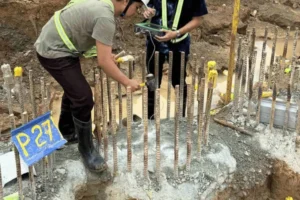
Concrete structures require reliable evaluation methods to confirm safety, durability, and long-term performance. One widely used field method is the Rebound Hammer Test, which offers a fast approach to estimate surface hardness and concrete strength without causing damage to the structure.
The Rebound Hammer Test plays a major role during construction quality checks and structural assessments of existing buildings. Engineers and inspectors rely on this method to quickly assess whether concrete elements such as slabs, beams, and columns meet expected performance levels.
Field testing becomes even more important for large-scale projects where time, cost efficiency, and structural safety must remain balanced. The Rebound Hammer Test supports these requirements by offering immediate readings that help guide decisions on quality control and structural evaluation.
What is the Rebound Hammer Test?
The Rebound Hammer Test, also known as the Schmidt Hammer test, is a non-destructive method used to estimate the surface hardness of concrete. It works through a spring-driven mechanism that strikes the concrete surface and records the rebound value.
The rebound value reflects the hardness of the surface, which can be correlated to an estimated compressive strength. The Rebound Hammer Test does not require cutting, drilling, or damaging the concrete, making it suitable for both new and existing structures.
This method is commonly applied in construction projects where quick assessment is needed without interrupting ongoing work. The Rebound Hammer Test also supports quality assurance by helping engineers verify consistency across different concrete pours.
Role of Rebound Hammer Test in Construction Quality Control
The Rebound Hammer Test serves as a practical tool for quality control during various construction stages. It helps identify areas of concrete that may not meet expected strength levels.
During site inspections, the Rebound Hammer Test provides immediate feedback on surface hardness. This allows engineers to detect weak zones that may require further evaluation or corrective action.
The Rebound Hammer Test also supports consistency checks across structural elements. Differences in rebound readings can indicate variations in concrete mixing, curing, or placement.
Construction teams rely on the Rebound Hammer Test to maintain quality standards throughout the project lifecycle.
How the Rebound Hammer Test Works
The Rebound Hammer Test follows a straightforward process that produces rapid field results. The procedure begins with preparing the concrete surface by cleaning loose particles and ensuring a smooth testing area.
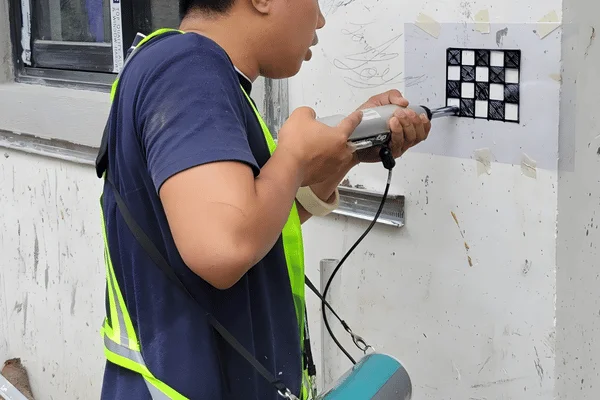
A spring-loaded hammer is then pressed against the concrete surface. Once released, it strikes the surface and rebounds. The rebound distance is recorded as a numerical value.
The Rebound Hammer Test uses these values to estimate concrete surface hardness. Engineers then correlate the readings with established charts to determine approximate compressive strength.
Several factors may influence results from the Rebound Hammer Test, including surface texture, moisture content, carbonation, and testing angle. Proper technique helps improve accuracy and consistency.
Standards Used for Rebound Hammer Testing
The Rebound Hammer Test follows recognized testing standards such as ASTM C805. These standards provide guidelines for consistent testing procedures, equipment calibration, and result interpretation.
Compliance with ASTM C805 ensures that results from the Rebound Hammer Test remain reliable and comparable across different projects and locations.
In the Philippines, accredited laboratories also follow requirements set by the Department of Public Works and Highways – Bureau of Research and Standards (DPWH-BRS). One example is Inch-On Materials Testing Laboratory, which performs field testing services including the Rebound Hammer Test under controlled procedures and international standards.
Standardized testing strengthens confidence in the Rebound Hammer Test results, especially for public infrastructure and private construction projects requiring strict quality assurance.
Applications of Rebound Hammer Test
The Rebound Hammer Test is widely used across many construction applications. It is commonly applied to structural elements such as slabs, beams, columns, walls, and pavements.
One major application of the Rebound Hammer Test is quality control of newly poured concrete. Engineers use it to confirm whether concrete strength develops as expected during curing stages.
Another application involves structural assessment of aging infrastructure. The Rebound Hammer Test helps determine whether concrete surfaces show signs of deterioration or reduced hardness over time.
The Rebound Hammer Test also supports inspection work before retrofitting or rehabilitation projects, giving engineers a clearer understanding of existing structural conditions.
Advantages of Rebound Hammer Testing
The Rebound Hammer Test offers several practical advantages in construction evaluation.
One key advantage is its non-destructive nature. The Rebound Hammer Test does not damage the structure, making it suitable for completed and active projects.
Another advantage is speed. The Rebound Hammer Test provides immediate results on-site, helping engineers make fast decisions.
The method is also cost-efficient since the Rebound Hammer Test requires minimal equipment and preparation compared to destructive testing methods.
Flexibility adds another benefit, as the Rebound Hammer Test can be applied to various structural elements and project stages.
Limitations of the Rebound Hammer Test
Although the Rebound Hammer Test is useful, it has certain limitations that must be considered during interpretation.
The Rebound Hammer Test primarily evaluates surface hardness and does not directly measure internal concrete strength. This means deeper structural conditions may not be fully reflected.
Surface conditions such as roughness, moisture, and carbonation can affect readings from the Rebound Hammer Test. These factors may lead to variations in results.
For more accurate assessment, the Rebound Hammer Test is often combined with other methods such as core sampling or rebar scanning. Engineering judgment plays a key role in interpreting results from the Rebound Hammer Test.
Rebound Hammer Test vs Other Concrete Testing Methods
The Rebound Hammer Test differs from destructive testing methods like core sampling. Core testing requires extracting concrete samples, while the Rebound Hammer Test leaves the structure intact.
Other non-destructive methods include ultrasonic pulse velocity testing and rebar scanning. Each method provides different types of information about concrete performance and internal conditions.
The Rebound Hammer Test is best suited for quick surface evaluation, while other methods offer deeper insight into internal structure and reinforcement layout.
Combining the Rebound Hammer Test with additional testing methods provides a more complete assessment of structural quality.
Integration with Rebar Scanning for Complete Assessment
The Rebound Hammer Test focuses on surface hardness, while rebar scanning provides information about internal reinforcement. Combining both methods results in a more complete evaluation of structural conditions.
Rebar scanning identifies steel reinforcement location, spacing, and cover depth. When paired with the Rebound Hammer Test, engineers gain both surface and internal data for better decision-making.
This combined approach supports safe coring, drilling, and retrofitting work. The Rebound Hammer Test ensures surface quality, while scanning prevents damage to reinforcement during construction activities.
Role of DPWH-BRS Accredited Laboratories
Accredited laboratories play a major role in ensuring reliable results for the Rebound Hammer Test. These laboratories follow strict testing procedures and international standards.
Inch-On Materials Testing Laboratory provides field and laboratory services that include the Rebound Hammer Test, soil testing, and concrete evaluation.
Accreditation ensures that the Rebound Hammer Test results meet required standards for government and private construction projects. This builds confidence in structural assessments and quality control processes.
Field Testing Services in Construction Projects
Field testing supports real-time decision-making during construction. The Rebound Hammer Test is one of the most commonly used field methods due to its speed and reliability.
Field engineers conduct the Rebound Hammer Test directly at construction sites, allowing immediate assessment of concrete quality. This helps detect issues early and reduces risk of structural problems.
The Rebound Hammer Test also supports project monitoring by tracking concrete strength development over time.
Why Rebound Hammer Test Matters in Modern Construction
Modern construction requires fast, accurate, and safe evaluation methods. The Rebound Hammer Test meets these needs by providing quick insights into concrete surface conditions.
The Rebound Hammer Test supports safety by identifying weak areas before structural failure occurs. It also improves project efficiency by reducing delays associated with destructive testing.
As construction demands continue to grow, the Rebound Hammer Test remains a key tool for engineers and quality control professionals.
Frequently Asked Questions (FAQ)
What is the main purpose of the Rebound Hammer Test?
The Rebound Hammer Test estimates concrete surface hardness and provides an indirect indication of compressive strength.
Is the Rebound Hammer Test destructive?
No. The Rebound Hammer Test is a non-destructive testing method and does not damage the structure.
How accurate is the Rebound Hammer Test?
The Rebound Hammer Test provides approximate strength values based on surface conditions. Accuracy improves when combined with other testing methods.
Where is the Rebound Hammer Test commonly used?
The Rebound Hammer Test is used on slabs, beams, columns, walls, pavements, and other concrete structures.
Can the Rebound Hammer Test replace core testing?
No. The Rebound Hammer Test is mainly for surface evaluation. Core testing is needed for direct strength measurement.
Why is the Rebound Hammer Test important in construction?
The Rebound Hammer Test helps ensure quality control, structural safety, and early detection of weak concrete areas.