A strong foundation determines the safety and durability of every construction project. Hidden defects within drilled shafts, bored piles, and deep foundations can compromise structural integrity, leading to costly repairs or even catastrophic failures. Engineers and construction teams rely on precise testing methods to ensure concrete foundations meet safety and design standards. The Crosshole Sonic Logging Test has become a critical tool for detecting internal flaws in concrete structures without causing damage. This advanced non-destructive testing method allows project teams to evaluate foundations thoroughly, giving confidence that structures are built on solid ground.
Philippine construction projects face unique challenges due to varying soil conditions, weather patterns, and the scale of infrastructure developments. Conducting a Crosshole Sonic Logging Test ensures that each pile and drilled shaft is free of voids, honeycombing, or weak zones, supporting compliance with DPWH-BRS standards and international construction practices. Inch-On Materials Testing Laboratory provides expert CSL testing services, offering precise insights that safeguard projects from hidden structural issues.
What is Crosshole Sonic Logging Test?
The Crosshole Sonic Logging Test is a non-destructive method designed to assess the internal quality of concrete in deep foundations such as drilled shafts and bored piles. Unlike visual inspections, which can only examine external surfaces, CSL testing measures the transmission of sound waves through the concrete, identifying any inconsistencies that may exist within the structure.
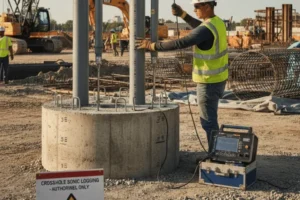
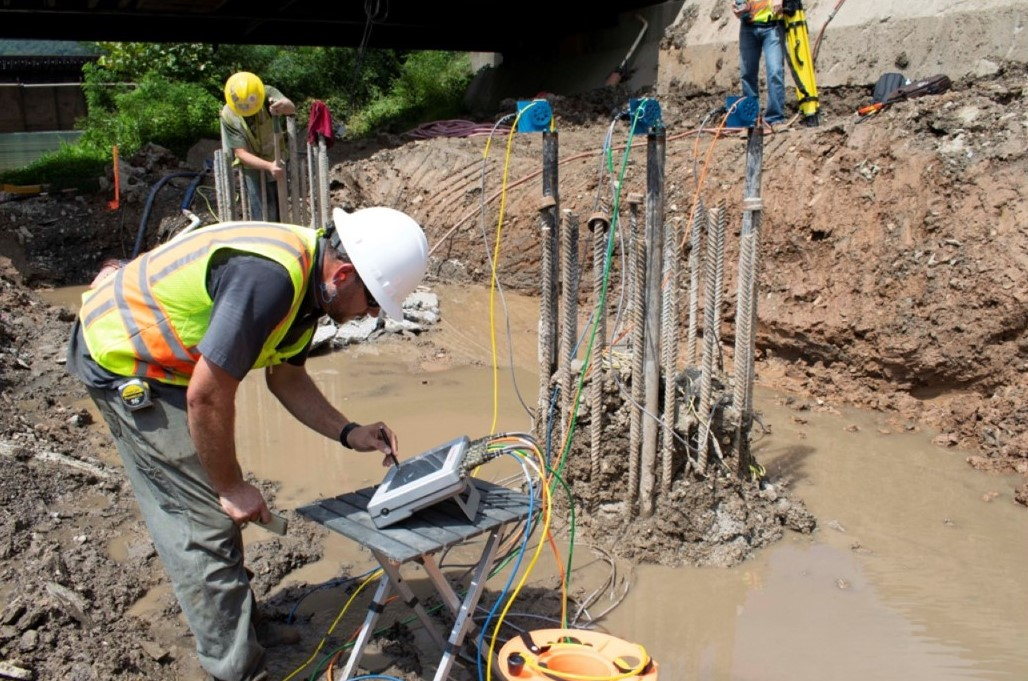
During the test, specially calibrated transducers are inserted into pre-installed tubes or conduits within the concrete. Sound waves are then transmitted from a source transducer to a receiving transducer on the opposite side of the tube. Engineers analyze the travel time and strength of these signals to detect anomalies such as voids, cracks, or areas of low-density concrete. The resulting data provides a detailed profile of the foundation’s internal condition, allowing teams to pinpoint potential issues accurately.
The Crosshole Sonic Logging Test has several advantages. It is non-destructive, meaning the concrete remains intact, avoiding costly damage or delays. The method is highly precise and can detect defects as small as a few centimeters, providing engineers with critical information for structural assessment and compliance verification.
Why Crosshole Sonic Logging Test is Important for Construction
Safety and reliability are the most important factors in construction projects. Foundations are responsible for supporting the entire structure, so even minor flaws can have serious consequences. The Crosshole Sonic Logging Test identifies defects that could compromise load-bearing capacity, preventing failures before they occur.
Concrete structures may develop voids, honeycombing, or weak zones during casting, particularly in large, deep foundations. These hidden imperfections often go unnoticed without advanced testing. By performing a CSL test, engineers can detect these issues early, enabling corrective measures that save time and resources.
Compliance with local and international standards is another key reason to use CSL testing. Inch-On Materials Testing Laboratory follows ASTM and AASHTO guidelines and maintains accreditation from the Department of Public Works and Highways – Bureau of Research and Standards (DPWH-BRS). Using the Crosshole Sonic Logging Test ensures that construction projects meet all regulatory requirements, safeguarding both public safety and project investment.
Crosshole Sonic Logging Test Process Explained
Conducting a Crosshole Sonic Logging Test involves a series of carefully controlled steps to produce reliable results. First, engineers prepare the drilled shafts or bored piles by installing steel or PVC tubes through which the transducers will travel. These tubes are typically placed immediately after concrete placement to ensure proper alignment and minimize interference.
Once the tubes are in position, transducers are inserted. One transducer emits sound waves, while the other receives them on the opposite side. The time it takes for the waves to travel and the strength of the received signals indicate concrete density and detect internal flaws. Multiple readings are taken along the length of each pile or shaft, creating a detailed profile of the structure.
Data analysis is the next critical step. Engineers interpret signal variations to identify voids, cracks, or areas of weak concrete. This analysis allows construction teams to take corrective actions where necessary, ensuring that the foundation performs as intended. Throughout the process, trained technicians from Inch-On Materials Testing Laboratory operate the specialized equipment, ensuring accuracy, compliance, and high-quality reporting.
Inch-On’s Expertise in Crosshole Sonic Logging Test
Established in 2018, Inch-On Materials Testing Laboratory is a trusted independent facility offering advanced testing services for soil, concrete, and foundations. Accredited by DPWH-BRS, Inch-On maintains strict compliance with ASTM and AASHTO standards, guaranteeing reliable results for construction teams across the Philippines.
Field testing is a core service provided by Inch-On. The Crosshole Sonic Logging Test is conducted directly at construction sites, allowing immediate assessment of foundation quality. This approach ensures that engineers can identify potential issues quickly, reducing project delays and reinforcing safety.
Laboratory testing complements field services by offering detailed analysis of soil and construction materials. Using state-of-the-art equipment, Inch-On verifies material strength, density, and durability, providing a comprehensive view of project readiness. Combining laboratory and field expertise allows Inch-On to deliver precise insights that enhance structural integrity and project confidence.
Real-World Applications of Crosshole Sonic Logging Test
The Crosshole Sonic Logging Test is widely applied in major infrastructure projects, high-rise buildings, and bridge construction. Drilled shafts and bored piles often carry massive loads, making early detection of defects critical. Engineers rely on CSL testing to assess foundation health before adding structural weight, ensuring long-term safety and performance.
For instance, in bridge construction, multiple bored piles may be installed over uneven terrain. CSL testing identifies variations in concrete quality between piles, allowing engineers to correct weak areas and maintain consistent load-bearing capacity. In high-rise construction, detecting voids in foundation shafts can prevent uneven settling or structural damage over time.
In Philippine construction projects, where soil conditions and environmental factors can vary significantly, the Crosshole Sonic Logging Test serves as a crucial quality control measure. By combining local expertise with advanced testing methods, Inch-On Materials Testing Laboratory supports reliable, compliant, and durable foundations across diverse projects.
Benefits of Choosing Inch-On for Crosshole Sonic Logging Test
Selecting the right laboratory for CSL testing is essential for accurate results and construction confidence. Inch-On Materials Testing Laboratory offers several benefits for clients seeking foundation verification:
High-precision testing ensures that every drilled shaft and bored pile is evaluated for hidden defects, voids, and density inconsistencies. Expert technicians operate specialized CSL equipment, producing detailed, actionable reports for engineers and project managers. Independent evaluation by Inch-On guarantees unbiased results, maintaining transparency and accountability.
Fast turnaround of test results supports project timelines, allowing corrective actions to be implemented without significant delays. The combination of field testing and laboratory analysis ensures that both materials and foundations meet all regulatory and safety standards. Choosing Inch-On for the Crosshole Sonic Logging Test provides peace of mind that construction projects are built on reliable, high-quality foundations.
Takeaway
The Crosshole Sonic Logging Test is a vital tool for evaluating the internal quality of concrete foundations. Detecting voids, weak zones, and inconsistencies early in construction protects projects from delays, safety risks, and costly repairs. Inch-On Materials Testing Laboratory delivers precise, reliable CSL testing services that comply with DPWH-BRS standards, providing engineers and construction teams with the confidence that every drilled shaft and bored pile is structurally sound.
By integrating advanced field testing, laboratory analysis, and expert technical guidance, Inch-On ensures that Philippine construction projects are built on strong, defect-free foundations. Conducting a Crosshole Sonic Logging Test not only safeguards structural integrity but also supports regulatory compliance and long-term project success.
Frequently Asked Questions (FAQ)
How long does a Crosshole Sonic Logging Test take?
The duration of a CSL test depends on the number and length of piles or drilled shafts being tested. Typically, tests can be completed in a few hours per shaft, with data analysis performed immediately afterward to generate actionable results.
Can CSL testing detect all types of concrete defects?
The Crosshole Sonic Logging Test is highly effective at detecting voids, honeycombing, cracks, and low-density areas within concrete. While it identifies most internal defects, combining CSL testing with visual inspections and laboratory material analysis provides the most comprehensive assessment.
Is CSL suitable for all foundation types?
CSL testing is most commonly applied to drilled shafts and bored piles. It can also be adapted for other deep foundation types that incorporate conduits or access tubes for transducer insertion. Engineers evaluate the suitability of CSL for each project based on foundation design and construction methods.
Why is CSL testing important for Philippine construction projects?
Soil variability, weather conditions, and project scale in the Philippines make foundation quality critical. Performing a Crosshole Sonic Logging Test ensures that foundations are free of defects, comply with DPWH-BRS standards, and support safe, durable structures over time.
Can CSL testing prevent structural failures?
By identifying hidden defects early, the Crosshole Sonic Logging Test allows engineers to implement corrective measures before loads are applied. This reduces the risk of structural failures and ensures the long-term reliability of construction projects.