
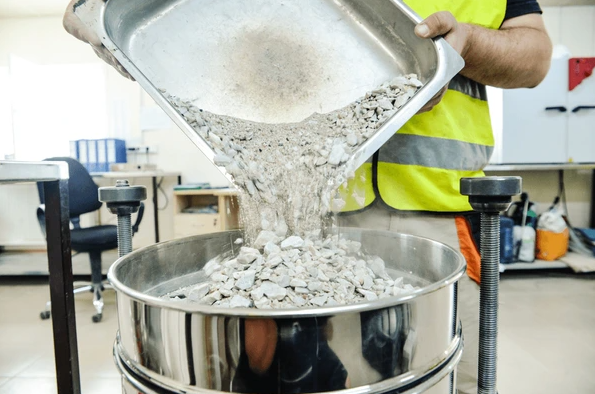
Concrete Aggregates Testing plays a critical role in ensuring the strength, durability, and safety of construction projects. The quality of concrete or asphalt largely depends on the aggregates within it, making accurate testing essential for reliable performance. Poor aggregate quality can lead to structural weaknesses, reduced lifespan, and costly repairs. Inch-On Materials Testing Laboratory, a DPWH-BRS accredited facility, provides precise Concrete Aggregates Testing services that meet international standards and regulatory requirements. Their laboratory testing and field testing services offer construction teams the confidence needed to deliver high-quality infrastructure projects.
Concrete Aggregates Testing is not merely a procedural requirement but a strategic step to guarantee that concrete mixtures perform as intended under real-world conditions. From particle size distribution to the detection of deleterious substances, every aspect of aggregate quality affects the final outcome. Partnering with a reputable laboratory like Inch-On ensures adherence to ASTM and AASHTO protocols, producing reliable, defensible results for contractors, engineers, and project managers.
What Are Concrete Aggregates?
Concrete aggregates are granular materials such as sand, gravel, crushed stone, or recycled concrete used to provide bulk, strength, and stability to concrete. They can be classified into coarse and fine aggregates. Coarse aggregates, typically larger than 4.75 mm, provide compressive strength and structural stability, while fine aggregates, such as sand, fill voids and improve workability.
Aggregates influence various properties of concrete, including shrinkage, durability, and resistance to cracking. The quality, grading, and cleanliness of aggregates determine the performance of the concrete mix. Concrete Aggregates Testing evaluates these factors to ensure that each batch meets project specifications and regulatory standards. Testing helps identify aggregates that could compromise structural integrity or reduce long-term durability.
Concrete Aggregates Testing also distinguishes between natural and manufactured aggregates. Natural aggregates come from riverbeds, quarries, or gravel pits, while manufactured aggregates are produced by crushing rocks or recycled concrete. Each type has specific properties, and testing determines its suitability for different construction applications.
Why Concrete Aggregates Testing Matters
Concrete Aggregates Testing is essential to prevent structural failures, maintain safety, and ensure regulatory compliance. Construction materials are subjected to varying environmental and load conditions, making precise evaluation necessary to avoid long-term issues.
Testing ensures that aggregates meet grading, strength, and durability requirements. Coarse and fine aggregates that are improperly sized or contain excessive fines, clay, or other weak materials can weaken the concrete matrix. Concrete Aggregates Testing detects these problems before construction, reducing the risk of costly repairs or project delays.
Durability is another critical factor assessed during Concrete Aggregates Testing. Aggregates exposed to freeze-thaw cycles, wet-dry cycles, or abrasion must resist degradation. Testing evaluates their soundness, hardness, and resistance to wear, providing essential data for selecting materials suitable for specific construction environments.
Compliance with standards is another reason Concrete Aggregates Testing is vital. Inch-On Materials Testing Laboratory follows ASTM and AASHTO protocols to provide accurate, internationally recognized results. This ensures that concrete used in infrastructure projects, commercial buildings, and residential structures meets all safety and regulatory requirements.
Key Concrete Aggregate Tests
Concrete Aggregates Testing encompasses a variety of procedures designed to evaluate particle size, durability, density, and the presence of harmful substances. Each test provides valuable information about the material’s behavior in concrete mixtures.
Particle Size & Gradation
Sieve Analysis (ASTM C136) determines the particle size distribution of aggregates. Proper gradation ensures that particles pack efficiently, reducing voids and improving workability. Well-graded aggregates contribute to stronger, more durable concrete.
Materials Finer Than 75-µm (ASTM C117) measures the content of silt, clay, or fine particles that can reduce bonding between aggregates and cement paste. Excess fines can weaken the concrete matrix, making this test critical for evaluating suitability.
Durability & Strength
Los Angeles Abrasion (ASTM C131) evaluates aggregate hardness and resistance to wear. By simulating the impact and friction aggregates experience during handling and service, this test identifies materials likely to degrade prematurely.
Soundness Test (ASTM C88) assesses how well aggregates withstand weathering. Repeated freeze-thaw cycles, wet-dry cycles, or exposure to salts can cause disintegration in weak aggregates. Soundness testing ensures that materials maintain structural integrity under environmental stress.
Physical Properties & Density
Specific Gravity & Absorption (ASTM C127) determines aggregate density and water absorption. Accurate measurements support proper mix designs and water-cement ratio calculations.
Unit Weight & Voids (ASTM C29) measures the density of aggregate batches and the percentage of voids between particles. Understanding these properties is critical for predicting concrete yield and ensuring consistency in every mix.
Deleterious Substances
Clay Lumps and Friable Particles (ASTM C142) identifies weak or contaminant materials that break down easily. These substances can cause surface defects, reduce strength, and shorten concrete lifespan. Concrete Aggregates Testing ensures aggregates are free from harmful contaminants.
Field Testing vs Laboratory Testing
Concrete Aggregates Testing includes both field and laboratory assessments. Field Testing evaluates soil, concrete, and pile foundations at the construction site. This provides real-time insights into ground conditions and foundation performance. It is especially important for high-stakes projects, where accurate evaluation of in-situ conditions prevents potential failures.
Laboratory Testing provides controlled conditions to assess physical, chemical, and mechanical properties of aggregates. Inch-On Materials Testing Laboratory uses state-of-the-art equipment and follows ASTM protocols to ensure precise results. Both field and laboratory testing work together to provide a complete understanding of material performance.
Why Choose Inch-On Materials Testing Laboratory
Concrete Aggregates Testing services at Inch-On Materials Testing Laboratory are delivered with a focus on accuracy, reliability, and compliance. Accredited by the Department of Public Works and Highways – Bureau of Research and Standards (DPWH-BRS), the laboratory guarantees results recognized by regulators and industry professionals.
Since 2018, Inch-On has provided testing services that support safe and durable construction projects. Their team of experts conducts field and laboratory tests using specialized equipment to ensure every material meets project requirements. Adherence to ASTM and AASHTO protocols produces internationally recognized data, enabling engineers and contractors to make informed decisions.
Concrete Aggregates Testing with Inch-On helps reduce construction risks, prevent material failure, and improve project efficiency. By providing clear, defensible results, Inch-On supports both large infrastructure projects and smaller commercial or residential developments.
Benefits of Professional Concrete Aggregates Testing
Professional Concrete Aggregates Testing offers multiple advantages. It helps detect material deficiencies before construction, avoiding costly rework. Testing ensures compliance with local and international standards, improving safety and project credibility.
Durable and properly graded aggregates enhance concrete performance, increasing lifespan and minimizing maintenance requirements. Reliable testing data allows engineers to optimize mix designs, achieving the required strength and workability while reducing waste. Concrete Aggregates Testing also protects investments by ensuring materials perform as expected under environmental and load conditions.
Takeaway
Concrete Aggregates Testing ensures that construction materials meet the standards necessary for safety, durability, and performance. Partnering with Inch-On Materials Testing Laboratory guarantees accurate, reliable, and compliant results, supporting the success of every project.
FAQ About Concrete Aggregates Testing
What is Concrete Aggregates Testing?
Concrete Aggregates Testing evaluates the physical, mechanical, and chemical properties of aggregates used in concrete to ensure strength, durability, and compliance with standards.
Why is particle size important in Concrete Aggregates Testing?
Particle size affects packing, workability, and concrete strength. Proper gradation ensures minimal voids and optimal performance.
Which tests measure aggregate durability?
Los Angeles Abrasion (ASTM C131) and Soundness (ASTM C88) are standard tests that determine hardness, wear resistance, and the ability to withstand environmental stress.
How does Concrete Aggregates Testing prevent construction failures?
By identifying weak, contaminated, or improperly graded aggregates, testing reduces the risk of structural defects, cracking, or premature deterioration.
Can field and laboratory testing be combined?
Yes, field testing provides on-site assessment of foundations and soil, while laboratory testing evaluates aggregate properties under controlled conditions. Both together provide a complete material performance picture.
Why choose Inch-On for Concrete Aggregates Testing?
Inch-On Materials Testing Laboratory is DPWH-BRS accredited, follows ASTM and AASHTO protocols, and provides accurate, internationally recognized results.
How often should aggregates be tested?
Testing frequency depends on project size, material source, and regulatory requirements. Large or high-stakes projects may require testing for each batch or delivery.