Singapore’s skyline continues to grow with commercial towers, residential developments, hotels, mixed-use properties, and other high-rise structures. Keeping these buildings clean, inspected, and properly maintained requires more than standard ground-level equipment. Building owners and facility teams need dependable systems that can provide controlled access to exterior façades, glass surfaces, architectural features, and hard-to-reach areas.
A building maintenance unit (BMU) Singapore system provides a dedicated solution for high-rise exterior maintenance. Designed around the structure and its access requirements, a BMU can support activities such as façade cleaning, glass replacement, structural inspection, repair work, and other maintenance tasks.
For building owners, contractors, and facility management teams, selecting the right access equipment is a major decision. System capacity, building geometry, suspension arrangements, safety equipment, maintenance requirements, and long-term operating conditions all need careful consideration.
GROXX Gears provides heavy-duty industrial solutions for construction and maintenance applications across Singapore. Its product and service range covers fall protection, rigging equipment, precision fasteners, and building maintenance systems. Its building maintenance offering includes suspended access solutions for façade cleaning, glass replacement, and structural inspections.
What Is a Building Maintenance Unit (BMU)?
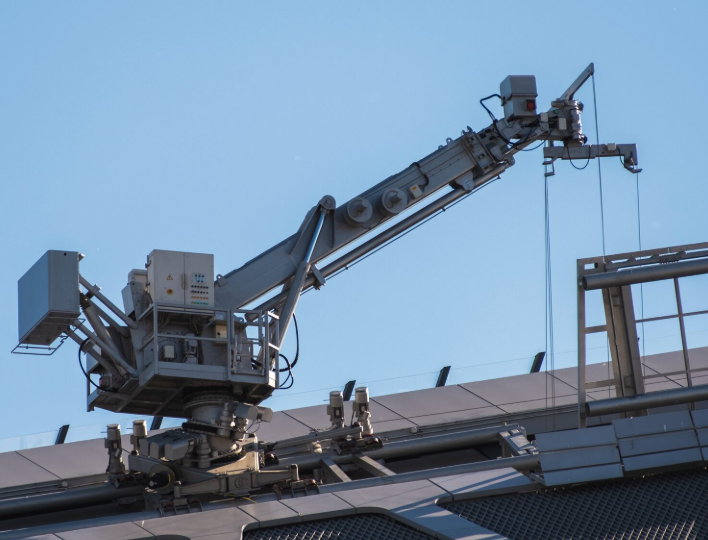
A Building Maintenance Unit, commonly called a BMU, is a dedicated access system designed to help workers reach exterior sections of high-rise buildings. Depending on the building design, a BMU may be installed as part of the roof structure and connected to equipment that allows a suspended platform or cradle to move along the building façade.
The main purpose of a building maintenance unit (BMU) Singapore system is to provide controlled access for recurring exterior maintenance activities.
Typical BMU applications include:
- Façade cleaning
- Glass cleaning
- Glass replacement
- External building inspection
- Structural inspection
- Repair and maintenance work
- Architectural façade maintenance
- Access to difficult exterior sections
A properly planned BMU system takes the building’s structure and façade arrangement into account. High-rise buildings can have different shapes, setbacks, corners, recessed sections, curved surfaces, and architectural features. Access equipment therefore needs to match the actual requirements of each property.
GROXX Gears positions its building maintenance systems as solutions for suspended access, particularly for façade cleaning, glass replacement, and structural inspections.
Why Building Maintenance Units Matter for Singapore High-Rise Buildings
High-rise façades require regular attention. Dust, rain, pollution, humidity, weather exposure, and daily environmental conditions can affect external surfaces over time. Glass façades also require routine cleaning to maintain appearance and visibility.
Traditional access methods may not always provide practical coverage for tall structures. A dedicated building maintenance unit (BMU) Singapore solution can give maintenance teams a controlled method for reaching exterior surfaces.
A BMU can support recurring maintenance while helping property teams plan access around scheduled cleaning and inspection programs.
For commercial towers, residential developments, hotels, and mixed-use buildings, this can make exterior maintenance more organized and manageable.
Designed for Modern Façade Access
Modern buildings often feature extensive glass surfaces, curtain walls, architectural projections, recessed sections, and other complex designs. Workers may need to reach different elevations and façade sections without relying solely on temporary access arrangements.
A BMU can provide a dedicated access platform suited to the building’s exterior maintenance requirements.
Supports Regular Building Maintenance
A building requires more than occasional cleaning. Exterior maintenance can include visual inspections, glass replacement, repairs, fixture checks, and structural assessments.
A building maintenance unit (BMU) Singapore system can serve as part of a property’s long-term maintenance strategy.
Supports Work-at-Height Safety Planning
Exterior building work creates work-at-height considerations. BMU operation should therefore be supported by appropriate safety equipment, trained personnel, inspection procedures, and established operating practices.
GROXX Gears also provides fall arrest and high-rise safety solutions, allowing BMU requirements to be considered alongside wider work-at-height protection needs.
Key Components of a Building Maintenance Unit
A BMU consists of several components that work together to provide controlled façade access. Exact configurations can vary according to building design, access requirements, and engineering specifications.
Roof-Mounted Support Structure
The roof structure provides the foundation for many BMU arrangements. It must be suitable for the loads and operating conditions associated with the system.
Structural assessment is therefore an important part of BMU planning. The support arrangement should match the building’s structural characteristics and the intended operating requirements.
Suspended Platform
A suspended platform or cradle provides a working area for personnel carrying out façade maintenance tasks.
Platform design can depend on factors such as:
- Required working capacity
- Building height
- Façade width
- Tools and equipment required
- Maintenance tasks
- Access coverage
- Building geometry
Hoisting Mechanism
The hoisting system controls vertical movement along the façade. Reliable movement is essential when workers need to reach different elevations during cleaning, inspection, repair, or replacement activities.
Equipment selection should account for expected usage, load requirements, operating conditions, and manufacturer specifications.
Suspension Equipment
Suspension components connect the working platform to the supporting structure and allow controlled movement.
Ropes, suspension equipment, anchors, and associated components should be selected according to the system design and applicable requirements.
Travel and Positioning Equipment
Some buildings require more than vertical movement. Façade geometry may require horizontal travel or positioning capabilities so workers can reach different sections of a building exterior.
A detailed access assessment can help identify whether additional movement capabilities are required.
Building Maintenance Unit vs. Other High-Rise Access Methods
Different buildings require different access strategies. A building maintenance unit (BMU) Singapore system is one option among several methods available for high-rise exterior work.
BMU Systems
BMUs are particularly suitable for buildings that require recurring façade maintenance and dedicated exterior access.
Typical applications:
- High-rise façade cleaning
- Glass maintenance
- External inspection
- Repair work
- Recurring building maintenance
Suspended Access Platforms
Suspended access platforms can provide workers with access to elevated façades through dedicated suspension arrangements. They may suit specific cleaning, inspection, and maintenance projects.
Rope Access
Rope access can be useful where façade geometry or restricted areas make conventional platforms difficult to position. Proper training, equipment, planning, and safety procedures are essential.
Scaffolding
Scaffolding can provide broad access across selected areas and may work well for construction or extended repair projects. However, installation requirements, available space, building height, and project duration must be considered.
Mobile Elevated Work Platforms
MEWPs can provide elevated access for selected maintenance activities. Their suitability depends on ground conditions, machine reach, access routes, and the building’s surrounding environment.
Choosing between these options requires a review of the building, work scope, access requirements, and safety controls.
What to Consider When Choosing a Building Maintenance Unit (BMU) Singapore
Selecting a BMU should involve more than comparing equipment specifications or purchase prices. The system needs to support the actual maintenance requirements of the building throughout its service life.
Building Height and Façade Design
Height is only one factor. The shape and arrangement of the façade can significantly affect access requirements.
Consider:
- Building height
- Façade width
- Setbacks
- Corners
- Recessed areas
- Curved surfaces
- Roof layout
- Architectural projections
- Obstructions
A detailed assessment can help determine how much façade coverage the system needs.
Load and Capacity Requirements
The system should accommodate the intended number of workers, tools, cleaning equipment, materials, and other approved loads.
Load requirements should be established during system planning rather than after installation.
Façade Access Coverage
A good building maintenance unit (BMU) Singapore solution should provide practical access to the façade areas that require routine attention.
Access gaps can create operational challenges and may require additional methods for certain sections. Early planning can reduce these issues.
Safety Features
Safety should be considered across equipment selection, installation, operation, inspection, and maintenance.
Depending on the system, relevant considerations may include:
- Emergency controls
- Secondary protection
- Suspension safety
- Fall arrest arrangements
- Anchorage
- Worker harnesses
- Controlled platform movement
- Emergency procedures
A BMU should form part of a wider work-at-height safety plan rather than being treated as the sole safety measure.
Durability
Singapore’s weather conditions expose external equipment to heat, humidity, rain, and frequent environmental changes. Equipment intended for long-term exterior use should therefore be selected with durability and maintenance requirements carefully considered.
GROXX Gears emphasizes heavy-duty industrial solutions designed for demanding construction and maintenance environments. Its wider product range includes high-performance safety and industrial equipment.
Inspection and Maintenance
Regular inspection helps identify wear, damage, corrosion, or other issues before equipment is placed back into service.
A maintenance program should consider:
- Equipment inspections
- Rope and suspension checks
- Hoist inspection
- Platform checks
- Electrical system checks
- Emergency system testing
- Structural component checks
- Replacement of worn components
- Maintenance records
Inspection frequencies and procedures should follow manufacturer guidance, equipment requirements, and applicable Singapore regulations.
How Groxx Gears Approaches Building Maintenance Systems
GROXX Gears focuses on heavy-duty industrial solutions designed for construction, maintenance, and high-rise applications. Its portfolio covers several areas that support demanding work environments, including fall protection, rigging equipment, precision fasteners, and building maintenance systems.
Its building maintenance offering focuses on suspended access applications such as:
- Façade cleaning
- Glass replacement
- Structural inspection
- External building maintenance
The company’s industrial positioning also emphasizes high-performance equipment designed for demanding conditions.
A building maintenance unit (BMU) Singapore solution should be evaluated according to the building rather than treated as a generic piece of equipment. Building geometry, façade coverage, work requirements, system capacity, and safety planning all affect the final setup.
For this reason, project discussions should begin with a clear understanding of the building and its maintenance needs.
Connecting BMU Systems With Fall Protection
BMU equipment and fall protection systems serve different functions, but both can form part of a coordinated high-rise safety strategy.
A BMU provides controlled access to exterior building surfaces. Fall protection equipment helps protect workers against falls when required by the task, system design, and work conditions.
Potential safety equipment may include:
- Full-body harnesses
- Fall arrest systems
- Lifelines
- Anchors
- Lanyards
- Suspension equipment
- Roof-level safety systems
GROXX Gears’ materials present both fall arrest systems and building maintenance systems as part of its industrial safety offering. Its fall arrest solutions include systems designed for work at height, while its building maintenance systems support façade access.
Workers should receive suitable training and follow approved procedures when operating BMU equipment or working at height.
BMU Applications for Singapore Buildings
A building maintenance unit (BMU) Singapore system can support various types of high-rise properties.
Commercial Towers
Commercial towers often feature large glass façades that require scheduled cleaning and inspection. A dedicated BMU can support recurring exterior access requirements.
Residential High-Rise Developments
Residential towers may require regular façade cleaning, external inspection, and repair activities. Access planning can help maintenance teams manage these tasks safely.
Hotels
Hotels often place strong importance on external appearance. Glass cleaning, façade maintenance, inspection, and external fixture work may require dependable access equipment.
Mixed-Use Developments
Mixed-use buildings can have multiple façade configurations and different maintenance requirements. A carefully planned access system can help address varied exterior areas.
Complex Architectural Structures
Buildings with curved surfaces, recessed façades, corners, and architectural projections can create additional access challenges.
A detailed BMU assessment can identify suitable positioning and movement requirements.
BMU Maintenance: Keeping Access Equipment Ready for Service
A BMU requires ongoing care. Regular maintenance helps keep equipment ready for approved work and supports early identification of potential equipment issues.
A practical maintenance program may include:
- Pre-use visual checks
- Scheduled equipment inspections
- Rope and suspension inspections
- Hoist checks
- Platform inspection
- Electrical system testing
- Emergency control testing
- Structural component assessment
- Cleaning and lubrication where applicable
- Replacement of worn components
- Maintenance documentation
- Operator feedback and issue reporting
Maintenance teams should follow manufacturer instructions and applicable regulatory requirements for inspection and servicing.
Proper documentation also gives facility managers a useful record of completed checks, repairs, replacements, and service activities.
Common Mistakes When Selecting a BMU
Choosing Equipment Without Studying the Building
Every high-rise property has its own structural and façade characteristics. Selecting equipment without reviewing these factors can result in limited access coverage or operational challenges.
Treating a BMU as the Complete Safety Solution
A BMU provides access. It should not automatically be viewed as the only safety measure required for every work-at-height task.
Additional fall protection systems may be necessary depending on the task and site conditions.
Ignoring Future Maintenance Requirements
A building may require façade cleaning today and glass replacement or structural inspection later.
A good BMU plan should account for both current and expected maintenance tasks.
Focusing Only on Initial Cost
Purchase price is only one factor. Building owners should also consider equipment quality, durability, servicing, replacement components, safety features, operational requirements, and long-term ownership costs.
Neglecting Operator Training
Even well-designed equipment requires competent operation. Workers should understand equipment controls, operating limits, inspection procedures, emergency actions, and applicable safety requirements.
Why Work With an Experienced BMU and High-Rise Safety Provider?
A building maintenance unit (BMU) Singapore system is closely connected to the building’s structure, façade, maintenance schedule, and safety requirements. Selecting a provider with experience across industrial equipment and high-rise safety can help project teams evaluate these requirements more effectively.
GROXX Gears’ portfolio covers building maintenance systems alongside fall protection, rigging equipment, and other heavy-duty industrial products.
This broader product range can be useful when a project requires multiple safety and access components.
For facility managers and building owners, the goal should be straightforward: provide workers with suitable access equipment while supporting safe, practical, and efficient maintenance operations.
Takeaway
A building maintenance unit (BMU) Singapore system can provide controlled exterior access for high-rise façade cleaning, glass replacement, structural inspection, repair, and other maintenance activities.
The right system should match the building rather than follow a one-size-fits-all approach. Height, façade design, access coverage, load requirements, suspension arrangements, safety equipment, durability, and maintenance needs all deserve careful consideration.
For high-rise properties, BMU equipment can also form part of a wider work-at-height strategy alongside fall arrest systems, lifelines, anchors, harnesses, and other safety equipment.
GROXX Gears supports high-rise construction and maintenance requirements through building maintenance systems, fall protection solutions, rigging equipment, and other heavy-duty industrial products. Its building maintenance offering covers suspended access applications such as façade cleaning, glass replacement, and structural inspection.
For building owners, contractors, and facility management teams searching for a building maintenance unit (BMU) Singapore solution, the first step is a clear assessment of the building, maintenance requirements, access challenges, and safety needs.
Need a reliable BMU solution for your high-rise project? Contact GROXX Gears to discuss your building access, façade maintenance, and high-rise safety requirements.
FAQ About Building Maintenance Unit (BMU) Singapore
What is a building maintenance unit (BMU)?
A Building Maintenance Unit is a dedicated access system designed to help workers reach exterior sections of high-rise buildings for tasks such as façade cleaning, inspection, repair, and glass replacement.
What does a BMU system do?
A BMU provides controlled access along a building façade. Depending on its design, the system can support vertical movement and other positioning requirements needed for exterior maintenance.
Is a BMU suitable for every high-rise building?
Not necessarily. Suitability depends on building height, façade design, roof structure, access coverage, load requirements, maintenance activities, and safety considerations.
A professional assessment should be completed before selecting a system.
What safety equipment works alongside a BMU?
Depending on the application, supporting equipment may include fall arrest systems, lifelines, anchors, harnesses, lanyards, suspension equipment, and other work-at-height controls.
The appropriate setup should be based on the equipment design, task requirements, risk assessment, and applicable regulations.
How often should BMU equipment be inspected?
Inspection requirements vary according to equipment type, manufacturer guidance, usage, operating conditions, and applicable requirements. Routine pre-use checks and scheduled inspections should form part of a documented maintenance program.
Can a BMU support façade cleaning and glass replacement?
Yes. These are key applications associated with suspended building maintenance systems. GROXX Gears specifically presents its building maintenance solutions for façade cleaning, glass replacement, and structural inspections.
How can I choose the right building maintenance unit (BMU) Singapore?
Start by assessing building height, façade geometry, required access zones, platform capacity, movement requirements, safety systems, environmental exposure, maintenance frequency, and long-term servicing needs.
A qualified provider can then help determine a suitable system based on those project requirements.