Working at height requires more than confidence and experience. Workers need reliable equipment that can help manage fall hazards while allowing them to move efficiently around their work area. A self-retracting lanyard is one of the important components used in many personal fall protection systems because it can provide mobility while automatically managing lifeline slack. For companies operating construction sites, industrial facilities, warehouses, rooftops, and maintenance areas, selecting suitable fall protection equipment is an important workplace responsibility. Understanding how this equipment works can help employers and workers make better decisions about their safety systems. When choosing a self-retracting lanyard philippines businesses should consider the equipment’s specifications, intended application, compatibility, inspection requirements, and environmental conditions. Proper selection is only one part of effective fall protection, since workers also need appropriate training, suitable anchorage, regular inspections, and a practical rescue plan. With the right approach, a self-retracting lanyard can support safer and more controlled movement during elevated work.
Understanding Self-Retracting Lanyards
A self-retracting lanyard, often called an SRL, is a fall protection device designed to provide workers with greater freedom of movement while helping manage the amount of lifeline between the worker and the anchorage point. The lifeline extends as the worker moves away from the device and retracts when the worker moves closer. This automatic action helps reduce excessive slack that can occur with a conventional fixed-length lanyard. If the system detects a rapid movement associated with a fall, its internal braking mechanism is designed to engage and help arrest the worker’s movement. SRLs are commonly connected between an approved anchorage point and a compatible full-body harness. Different models may have different lifeline lengths, capacities, connection configurations, and environmental ratings. Workers should always follow the manufacturer’s instructions because the exact operating characteristics and limitations can vary between products.
Why Self-Retracting Lanyards Matter for Philippine Workplaces
Work environments throughout the Philippines can expose employees to different types of elevated-work hazards. Construction projects may require workers to operate around unfinished structures, elevated platforms, roofs, scaffolding, and other areas where a fall could occur. Industrial facilities may have maintenance activities around machinery platforms, elevated walkways, tanks, or other structures. Building maintenance teams may also need to access rooftops and elevated areas for inspection, cleaning, repair, or equipment servicing. Weather conditions such as rain, heat, humidity, and exposure to dust can also influence how fall protection equipment should be selected, stored, and maintained. A properly selected self-retracting lanyard philippines solution can give workers useful mobility while helping manage slack during movement. Employers should still evaluate the entire work environment because an SRL is only one part of a broader fall protection strategy.
How a Self-Retracting Lanyard Works
The operating principle of an SRL is relatively straightforward, although its internal mechanism can be highly engineered. A lifeline is stored inside a housing and is connected to a worker through an appropriate connector and full-body harness. As the worker moves away from the anchorage, the lifeline extends from the housing. When the worker moves closer, the mechanism retracts the lifeline to help keep unnecessary slack to a minimum. Under normal movement, the worker can generally move within the device’s permitted working range without manually adjusting a fixed-length connection. During a sudden acceleration, the braking mechanism is designed to respond rapidly and limit the fall according to the device’s design. The equipment must be used within its specified configuration because anchorage position, clearance, connection method, and operating angle can affect system performance.
Key Components of a Self-Retracting Lanyard
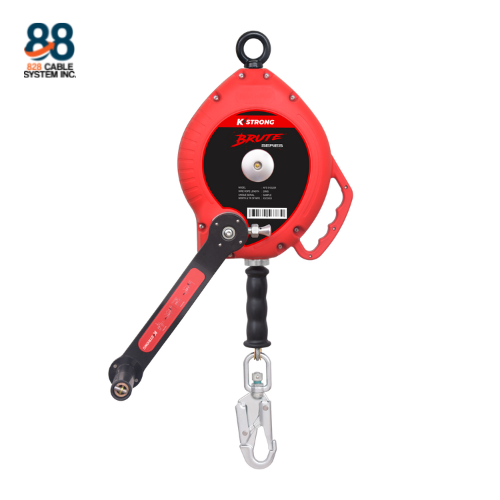
A self-retracting lanyard consists of several components that work together as part of a fall protection system. The retractable lifeline provides the connection between the worker and the SRL housing. Depending on the model, the lifeline may be made from webbing or a cable designed for a particular application. The housing protects the internal components and may be constructed to withstand demanding workplace conditions. Inside the housing, the retraction and braking mechanisms control lifeline movement and respond to sudden loading or acceleration. Connectors such as hooks or other approved attachment devices provide the connection between the equipment and an appropriate anchorage or harness attachment point. Some models also include swiveling components that can help accommodate worker movement and reduce twisting of the connection. Every component should be inspected regularly because damage to even one part can affect the reliability of the overall system.
Types of Self-Retracting Lanyards Available in the Philippines
Different work environments require different fall protection configurations. Compact SRLs can be useful when workers need equipment that is relatively easy to carry and manage around restricted work areas. Longer lifeline models may provide additional working range when the application requires greater movement, although longer equipment also requires careful consideration of fall clearance and swing-fall exposure. Web-based SRLs may be selected for particular applications where flexibility and weight are important considerations. Cable-based models may be appropriate for certain industrial environments where durability and specific operating characteristics are required. Some retractable systems are designed for specialized applications and may have particular anchorage or positioning requirements. Buyers should avoid selecting equipment solely because it has a longer lifeline or lower purchase price. The correct model should be determined by the work environment, required capacity, anchorage arrangement, clearance, applicable specifications, and manufacturer’s intended use.
Choosing the Right Self-Retracting Lanyard Philippines
Choosing a self-retracting lanyard requires careful consideration of the work being performed. The first factor is the worker’s required range of movement and the length of lifeline needed for the task. Employers should also verify the equipment’s rated capacity and ensure that it is suitable for the intended user and configuration. Anchorage compatibility is another important consideration because the SRL must be connected to an anchorage arrangement suitable for the application. Environmental conditions should also be evaluated, particularly when equipment will be exposed to moisture, dust, chemicals, extreme temperatures, or outdoor conditions. Buyers should review the manufacturer’s specifications, limitations, inspection procedures, and relevant safety documentation before purchasing equipment. It is also important to consider how the SRL will work with the worker’s full-body harness and other components. A reliable self-retracting lanyard philippines selection should therefore be based on the complete fall protection setup rather than on one product feature.
Self-Retracting Lanyard vs. Traditional Lanyard
Traditional fixed-length lanyards and self-retracting lanyards can both play important roles in fall protection, but they operate differently. A fixed-length lanyard maintains a predetermined connection length, which may provide a simple setup for certain applications. An SRL automatically adjusts its lifeline length as the worker moves, potentially providing greater mobility within the equipment’s approved operating range. Automatic retraction can also help reduce excess slack compared with a fixed-length connection. However, an SRL is not automatically the better choice for every work situation because its performance depends on the equipment design, anchorage location, clearance, and application. Workers must understand the operating limitations of whichever equipment they are using. Employers should assess the specific task and fall hazards before deciding which type of connector is appropriate. The goal should always be to create a fall protection arrangement that is suitable for the work rather than simply choosing the most advanced-looking equipment.
Proper Use of a Self-Retracting Lanyard
Correct use is essential for getting the intended protection from an SRL. Workers should inspect the equipment before every use and look for damaged webbing, frayed cable, corrosion, deformation, broken components, contamination, or other unusual conditions. The SRL should be attached only to compatible connection points and anchorage systems approved for the application. Workers should avoid intentionally creating excessive slack or positioning themselves where the equipment could be subjected to conditions outside its design limits. The lifeline should not be tied, modified, shortened, or altered unless the manufacturer specifically permits the configuration. Workers should also avoid using equipment that has been subjected to a fall unless it has been properly removed from service and evaluated according to the manufacturer’s requirements. Training should cover correct connection, inspection, positioning, limitations, and emergency procedures. Employers should ensure that workers understand both the capabilities and limitations of their self-retracting lanyard before beginning elevated work.
Inspection and Maintenance Practices
Regular inspection helps identify equipment problems before they become more serious. A pre-use inspection should include the lifeline, housing, connectors, labels, attachment points, and visible components. Workers should look for cuts, tears, abrasion, corrosion, deformation, broken stitching, contamination, and other signs of deterioration. The locking and retraction functions should be checked according to the manufacturer’s instructions and without attempting unauthorized repairs. Equipment exposed to harsh environmental conditions may require additional attention depending on the manufacturer’s recommendations. Any SRL involved in a fall or subjected to significant impact should be removed from service and handled according to the manufacturer’s inspection requirements. Employers should maintain appropriate inspection and maintenance records when required by their workplace procedures or applicable requirements. Proper storage is also important because excessive moisture, chemicals, heat, sunlight, or physical damage can shorten the service life of fall protection equipment.
Common Mistakes to Avoid
Many fall protection problems are associated with incorrect equipment selection or improper use rather than the basic design of the equipment itself. One common mistake is using an SRL without conducting a pre-use inspection. Another is connecting the device to an anchorage that has not been assessed as suitable for the application. Workers may also underestimate the importance of fall clearance and assume that an SRL eliminates the need to evaluate the space below them. Modifying equipment, combining incompatible components, or ignoring manufacturer instructions can also create unnecessary risks. Some workers may continue using an SRL after it has been subjected to a fall without having it properly evaluated. Another problem is treating fall protection equipment as a substitute for hazard assessment and safe work planning. Avoiding these mistakes requires clear procedures, effective training, competent supervision, and consistent equipment inspection.
Workplace Applications for Self-Retracting Lanyards in the Philippines
Self-retracting lanyards can support various elevated-work activities when the equipment is appropriate for the specific application. Construction workers may use suitable SRLs when working around elevated structures, platforms, or other areas where fall exposure exists. Building maintenance teams may require fall protection when performing rooftop inspections, repairs, cleaning, or equipment servicing. Industrial workers may encounter elevated platforms, machinery areas, tanks, walkways, and maintenance locations that require carefully planned fall protection. Warehouses may also have elevated maintenance or access areas where workers need controlled movement while performing specific tasks. Contractors working on commercial buildings may use retractable fall protection equipment as part of a broader personal fall arrest arrangement. Each application should be assessed individually because the same equipment configuration may not be appropriate for every environment. Proper anchorage, clearance, equipment compatibility, worker training, and rescue planning should remain central to every application.
Understanding Anchorage When Using an SRL
The anchorage point is a critical component of any personal fall protection system. Even a high-quality SRL cannot provide the intended level of protection if it is connected to an unsuitable or improperly positioned anchorage. Anchorage selection should account for the structure, location, expected loading, connection method, and applicable requirements for the particular system. The position of the anchorage can also influence the worker’s available movement and potential swing-fall exposure. Workers should not assume that a pipe, railing, beam, or other convenient structural feature is automatically suitable for use as an anchorage. Employers should have anchorage systems evaluated and approved according to applicable requirements and manufacturer guidance. When the correct anchorage arrangement is unclear, qualified safety personnel or appropriate technical professionals should be consulted. Planning the anchorage before work begins can help prevent workers from improvising connections after reaching an elevated location.
Fall Clearance and Swing-Fall Considerations
Fall clearance is one of the most important factors to evaluate before using an SRL. Workers need enough available space below them to prevent contact with lower structures, equipment, platforms, or other hazards if a fall occurs. The required clearance depends on the equipment, anchorage configuration, worker position, and other factors specified by the manufacturer. Swing-fall exposure can occur when the worker moves laterally away from an anchorage and then falls, potentially causing the worker to swing toward a structure. An SRL should therefore not be treated as permission to work anywhere within its physical reach. Workers should understand the approved operating range and positioning requirements for the specific device. Employers should assess surrounding structures and possible impact hazards before elevated work starts. Careful positioning can help reduce unnecessary exposure and support a more effective fall protection arrangement.
Training and Worker Awareness
Training plays a major role in the effective use of fall protection equipment. Workers should understand how their self-retracting lanyard operates and what conditions could affect its performance. Training should cover equipment inspection, harness connection, anchorage selection, positioning, fall clearance, swing-fall hazards, and emergency procedures. Practical instruction can help workers become familiar with the physical operation of the equipment before they use it during actual elevated work. Refresher training can also help reinforce safe practices when workers change tasks, equipment, or work environments. Supervisors should monitor equipment use and address unsafe practices when they are observed. Workers should also be encouraged to report damaged equipment or unclear procedures rather than improvising solutions. A strong safety culture combines appropriate equipment with knowledge, supervision, planning, and accountability.
Selecting a Reliable Self-Retracting Lanyard Supplier in the Philippines
Choosing the right supplier can be just as important as selecting the right equipment. Buyers should look for suppliers that can provide detailed product specifications, usage information, inspection guidance, and appropriate documentation. A reputable supplier should be able to explain the differences between available SRL configurations and help customers identify equipment suitable for their intended application. Buyers should ask about rated capacity, lifeline length, materials, connection types, environmental limitations, inspection requirements, and manufacturer recommendations. After-sales support can also be valuable for organizations managing large quantities of fall protection equipment. Businesses should avoid making purchasing decisions based entirely on the lowest price because inadequate equipment or poor technical support can create greater operational challenges. Procurement teams should coordinate with safety personnel before purchasing equipment for specialized or high-risk applications. A knowledgeable self-retracting lanyard philippines supplier can help businesses make more informed decisions while supporting their broader workplace safety objectives.
Standards and Product Documentation
Safety equipment should always be supported by clear and appropriate product documentation. Documentation can provide important information about rated capacity, operating limitations, inspection procedures, compatible components, storage conditions, and intended applications. Buyers should review available certification or compliance information and determine whether the equipment meets the requirements relevant to their workplace. Product labels should remain legible because they may contain important identification and operating information. Employers should keep appropriate equipment records to support inspection, maintenance, and inventory management. Workers should also have access to the manufacturer’s instructions and understand the equipment’s basic limitations. When technical requirements are difficult to interpret, qualified safety professionals can provide useful guidance. Proper documentation helps organizations make informed decisions and establish consistent procedures for the equipment they use.
Building a Complete Fall Protection System
An SRL should not be viewed as a standalone solution to every fall hazard. Effective personal fall protection generally involves multiple compatible components working together. These can include a full-body harness, self-retracting lanyard or other appropriate connector, suitable anchorage, and procedures for responding to a fall. Employers should identify hazards before selecting equipment and determine whether the planned system is appropriate for the work environment. The system should also account for fall clearance, swing-fall hazards, worker movement, equipment limitations, and potential rescue requirements. Compatibility between components is particularly important because connecting separate products does not automatically mean that the resulting system is suitable. Workers need training on how the complete system should be used rather than receiving instruction about the SRL alone. A well-planned fall protection system gives workers a clearer framework for performing elevated tasks while managing foreseeable fall hazards.
FAQ About Self-Retracting Lanyard Philippines
What is a self-retracting lanyard?
A self-retracting lanyard is a fall protection device that automatically extends and retracts its lifeline as a worker moves. It is designed to provide controlled movement while helping manage slack between the worker and the anchorage. Many models include a braking mechanism that responds to rapid lifeline movement associated with a fall. The device is generally used with a compatible full-body harness and suitable anchorage system. Different models have different capacities, lengths, configurations, and application requirements. Workers should always follow the manufacturer’s instructions for the specific model. Proper training and inspection are also necessary for safe use.
How does a self-retracting lanyard stop a fall?
An SRL uses an internal mechanism that monitors the movement of its lifeline. During normal movement, the lifeline extends and retracts as the worker changes position. If the device detects rapid movement associated with a fall, the braking system is designed to engage and arrest the movement according to its rated performance. The exact braking mechanism varies between manufacturers and models. The equipment must be used within its specified operating conditions to function as intended. Anchorage location and fall clearance also remain important considerations. An SRL should therefore always be treated as one component of a complete fall protection system.
Where can self-retracting lanyards be used?
SRLs can be used in various work-at-height environments when the selected equipment is suitable for the application. Common examples include construction projects, industrial facilities, building maintenance, warehouses, rooftops, and elevated work platforms. The specific model should be selected based on the environmental conditions, required mobility, anchorage configuration, and manufacturer’s intended application. Outdoor use may require consideration of weather and environmental exposure. Industrial applications may require equipment designed for particular operating conditions. Workers should never assume that an SRL designed for one environment is automatically suitable for another. A proper hazard assessment should guide equipment selection.
How do I choose the right SRL for my workplace?
Start by identifying the type of elevated work being performed and the range of movement required. Review the SRL’s lifeline length, rated capacity, connection configuration, environmental limitations, and manufacturer specifications. Evaluate where the anchorage will be positioned and calculate the available fall clearance. Consider whether the SRL is compatible with the full-body harness and other components being used. Workers should also receive training appropriate to the selected equipment. Inspection, maintenance, storage, and replacement procedures should be established before the equipment enters service. When requirements are uncertain, qualified safety personnel should be consulted.
How often should a self-retracting lanyard be inspected?
Workers should perform a pre-use inspection before using the equipment. Additional detailed inspections should follow the manufacturer’s specified procedures and the organization’s workplace safety program. The inspection should examine the lifeline, housing, connectors, labels, and other components for signs of damage or deterioration. Equipment exposed to unusual conditions may require additional attention. An SRL that has been involved in a fall should be removed from service and evaluated according to the manufacturer’s requirements. Inspection records should be maintained when required by workplace procedures or applicable standards. Regular inspection helps identify problems before damaged equipment is used for elevated work.
Can an SRL be reused after a fall?
Equipment involved in a fall should not simply be returned to service without appropriate evaluation. The SRL should be removed from service and handled according to the manufacturer’s instructions. Some equipment may require inspection or servicing by an authorized or qualified party before it can be used again. Workers should never attempt unauthorized repairs or modifications. The same principle applies to other components that may have been subjected to significant loading. Employers should establish clear procedures for removing, identifying, inspecting, and replacing equipment after a fall. Following these procedures helps prevent potentially compromised equipment from being used again.
Can a self-retracting lanyard replace a full-body harness?
An SRL and a full-body harness perform different functions within a fall protection system. The SRL provides the retractable connection and fall arrest mechanism, while the harness provides an appropriate body attachment system for the worker. These components are generally used together when a personal fall arrest system requires them. The specific connection point on the harness must be compatible with the SRL and intended for the application. Workers should follow the manufacturer’s instructions for both pieces of equipment. Combining equipment without verifying compatibility can create unnecessary risks. Employers should evaluate the complete system rather than treating individual components as interchangeable.
What should I check before buying an SRL in the Philippines?
Buyers should first identify the work environment and specific fall hazards that the equipment needs to address. Important factors include lifeline length, rated capacity, materials, connection configuration, environmental suitability, and anchorage requirements. Product documentation and relevant certification information should also be reviewed. Buyers should verify that the SRL is compatible with their existing harnesses and anchorage systems. Supplier support, inspection guidance, product availability, and after-sales assistance may also be important for larger organizations. Price should be considered alongside product quality, suitability, and long-term equipment management. A properly selected self-retracting lanyard philippines solution should fit the actual needs of the workplace rather than being selected solely because of its appearance or cost.
Takeaway
Selecting the right fall protection equipment is an important responsibility for organizations that perform work at height. A self-retracting lanyard can provide useful mobility while automatically managing lifeline slack and responding to sudden movement according to its design. However, the equipment should always be used as part of a complete and properly planned fall protection system. Anchorage selection, fall clearance, equipment compatibility, inspection, maintenance, training, and rescue planning all contribute to safer elevated work. Philippine businesses should evaluate their specific workplace conditions before choosing an SRL and should rely on manufacturer instructions and appropriate safety guidance. Workers should also understand how to inspect, connect, position, and use their equipment correctly before beginning a task. By combining suitable equipment with responsible planning and training, organizations can create a more structured approach to managing fall hazards.